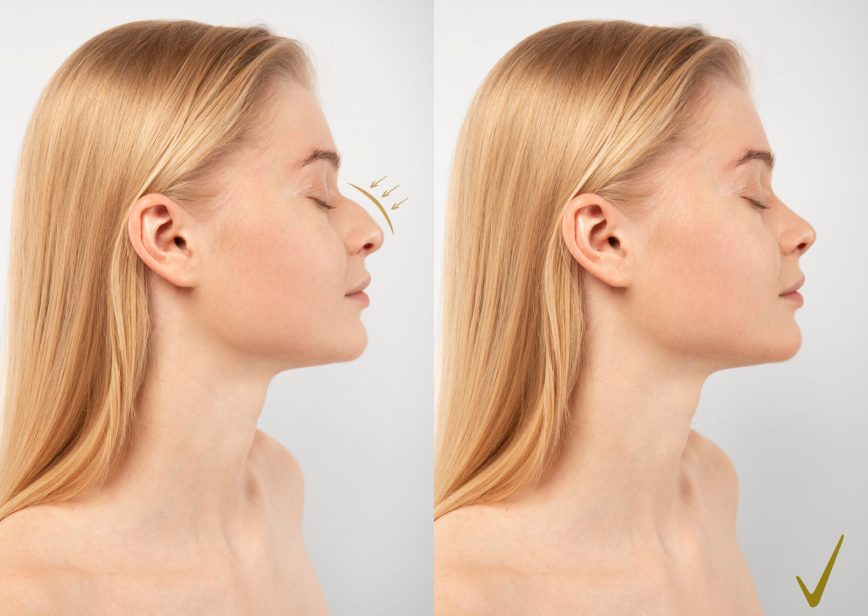
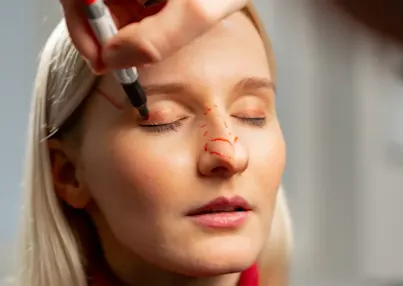
Closed Rhinoplasty (Scarless Nose Job)
A rhinoplasty technique where all incisions are made inside the nostrils, leaving no visible external scars — natural results and breathing function are planned together.
Quick Summary
Closed rhinoplasty is a modern surgical technique where all incisions are made inside the nostrils, leaving no visible external scars. In Bursa, Op. Dr. Önder Akdeniz plans closed rhinoplasty not only to improve the aesthetic shape of the nose but also to preserve and improve breathing function. For general information about rhinoplasty planning, you can also check our main guide page Bursa Rhinoplasty.
Definition
What is Closed Rhinoplasty?
Closed rhinoplasty is a method where interventions on the nasal dorsum, hump, nasal tip, and, if necessary, internal functional areas (septum, turbinates, valves) are performed from the inside of the nose.
Prominent feature: There is no visible external incision scar (incisions remain inside the nose).
Note: The term “scarless” indicates the absence of an incision scar on the outer skin; there is, of course, a surgical healing process inside the nose.
Eligibility
Who is Suitable for Closed Rhinoplasty?
Closed rhinoplasty may be suitable for patients with the following goals:
- Those who do not want an external incision scar
- Those with a hump/irregularity on the nasal dorsum, or drooping/deformity at the nasal tip
- Those who want a natural nose suitable for their facial features
- Those expecting a faster return to social life in suitable cases
- Those whose breathing problems need to be evaluated along with nasal aesthetics
The suitability of the closed technique is clarified during the examination based on the nasal tip cartilage structure, skin thickness, existing asymmetry, and previous surgical history.
Closed Rhinoplasty or Open Rhinoplasty? Both techniques yield successful results with proper planning in the right patient. The important thing is not “which technique is better,” but which technique is more suitable for your nasal structure.
For comparative details, you can review our Open Rhinoplasty page.
Evaluation
Advantages of Closed Rhinoplasty
Limits of Closed Rhinoplasty
- It may not be equally suitable for every nose type
- In very complex deformities, the surgeon’s mastery of the technique and planning become more critical
- For revision cases or advanced structural problems, the open technique might be the better choice in some situations
Process
How is Closed Rhinoplasty Performed?
The closed rhinoplasty process is fundamentally evaluated in 4 stages:
Examination and Analysis
- Internal nasal examination (septum, turbinate, valve)
- Skin thickness and cartilage strength analysis
- Evaluation of facial proportions and nose-face harmony
- The patient’s goal: natural appearance or more distinct change?
Personalized Planning
- Nasal dorsum (hump/irregularity correction)
- Nasal tip (lifting, narrowing, symmetry)
- Functional adjustments if necessary (breathing problems)
Surgical Application (Closed Technique)
- Incisions are made through the nostrils
- Bone/cartilage structures are shaped in a controlled manner
- Nasal tip supports are stabilized with suturing techniques
Goal: natural nasal dorsum transition + balanced nasal tip.
Recovery and Follow-up
- Regular check-ups
- Edema management and care recommendations
- Planned follow-up for the nose shape to settle
Recovery
Recovery Process After Closed Rhinoplasty
Recovery varies from person to person; skin thickness, healing rate of tissues, and the scope of surgery are determining factors. In general:
- First days Edema, tenderness, and a feeling of nasal congestion may occur
- First week Check-up and care period
- First weeks Swelling gradually decreases; nasal tip edema may take longer
- Full settling process Varies by person, regular follow-up is important
Key Points Supporting Recovery
- Avoiding the risk of impact
- Not neglecting the cleaning and check-ups recommended by the doctor
- Postponing heavy exercises for a while
- Planning the use of glasses according to the doctor’s recommendation
Are Breathing Problems Fixed with Closed Rhinoplasty?
Nose aesthetics is not just about appearance. In closed rhinoplasty, based on the examination findings, conditions such as septum deviation (crooked nose), turbinate enlargement, and nasal valve problems are evaluated, and if necessary, functional planning can be done in the same session. Not every procedure is performed on every patient; it is done if needed. The critical point here is accurate diagnosis.
Approach
Closed Rhinoplasty Bursa – Why Op. Dr. Önder Akdeniz?
- Focus on natural results: unexaggerated planning suitable for facial features
- Functional perspective: proceeding by evaluating breathing function
- Personalized design: technique selection according to skin-cartilage structure
- Planned follow-up: regular check-ups and guidance during the recovery process
Pricing
Closed Rhinoplasty Prices (2026)
The price of closed rhinoplasty varies depending on the nasal structure, the scope of the procedure to be performed (only aesthetic, or is there an additional functional procedure?), anesthesia, and planning details. Clear information is provided after the examination and personalized planning.
Read More
Related Treatment Pages
Curiosities
Frequently Asked Questions
Does closed rhinoplasty leave a scar from the outside?
There is no visible external incision scar; all incisions are inside the nose.
Is the closed technique suitable for everyone?
No. Nasal structure, skin thickness, the type of deformity, and previous surgery history determine suitability.
Is closed rhinoplasty or open rhinoplasty better?
There is no single answer for “better”. The most accurate choice is determined by your nasal structure.
How long is the recovery time?
Initial healing happens within weeks; the full settling of edema may take longer. Follow-up is important.
Does the nasal tip drop after closed rhinoplasty?
The risk is reduced with proper support techniques and planning. Tissue structure and healing also have an impact.
Can breathing problems be corrected in the same surgery?
If a need is identified during the examination, functional adjustments can be planned.
When does the nose shape “settle”?
It varies from person to person; the settling of the nasal tip and edema may take longer.
Can a revision (second surgery) be done with the closed technique?
It might be possible in some revisions; however, since revisions are more complex, suitability is determined during the examination.
For Examination and Planning
Closed rhinoplasty is a technique that aims to adjust the shape of the nose in harmony with facial features without leaving external scars. The best result is achieved through correct patient selection + personalized design + planned follow-up. You can contact us to get information about closed rhinoplasty in Bursa.
Contact Us